
Review · PRIVATE
Highlights & Hidden Gems With Locals: Best of Melbourne Private Tour
Melbourne in three hours, on foot. This private Melbourne walk is built for first-timers who want a clear sense of the city fast, with a local guide and about 20 planned stops across the central business district. I like that it is private, so it stays focused on your group, not a mixed crowd shuffle.
My second big win is the food-and-drink angle. You get a complimentary local drink and food tasting, then you layer that taste on top of major sights like Flinders Street Station and the National Gallery of Victoria’s famous stained glass ceiling by Simon Fieldhouse.
One thing to think about before you book: there is no hotel pickup, and the route is a steady walk. You’ll want moderate fitness and good walking shoes, and you should double-check meeting point directions so you do not waste time getting oriented.
Key things that make this tour worth your morning (or afternoon)
- Private group format keeps the pacing and questions focused on you
- Local drink and tasting add a real-world taste of the city, not just photos
- Street art lanes like Hosier Lane and AC/DC Lane bring Melbourne attitude into the route
- Architectural stops that actually have stories, including Flinders Street Station and St Paul’s Cathedral
- Ticket-free viewing points are built into the schedule for smooth sightseeing
- CO2 neutral operation with emissions offset, for climate-conscious travelers
The feel of a 3-hour private Melbourne CBD walk
This is a morning or afternoon walking tour designed to help you get your bearings quickly in Melbourne. The structure is simple: you start at Crown Melbourne by the river, then you work your way through classic CBD sights, famous buildings, laneway street art, and a couple of cultural anchors.
For me, the private format is the difference between seeing a city and actually understanding it. You can ask questions on the spot, and your guide can adjust the rhythm if your group moves slower or wants extra time for a specific photo, view, or corner.
The tour lasts about three hours, so it is short enough to fit into an arrival day without draining the rest of your schedule. It is also long enough to hit the major visual themes of Melbourne, not just one neighborhood.
A few more Melbourne bookings worth a look before you decide
- Great Ocean Road Small-Group Eco Tour from Melbourne
★ 5.0 · 6,607 reviews - From Melbourne: Great Ocean Road, 12 Apostles, Wildlife Tour
★ 4.7 · 6,020 reviews - Penguin Parade, & Wildlife Encounters Eco Tour from Melbourne
★ 5.0 · 3,774 reviews - Melbourne: Yarra Valley Wine, Gin, Whisky and Chocolate Tour
★ 5.0 · 3,667 reviews
Starting at Crown Melbourne, and why no hotel pickup matters
You meet at Crown Melbourne, 8 Whiteman St, Southbank VIC 3006, and the tour ends back at the meeting point. That means you should plan to arrive on your own and be able to walk back after the final stop.
This sounds minor, but it changes how you prepare. I recommend you:
- Choose shoes you can wear for an extended city walk
- Check your route to Crown Melbourne ahead of time, especially if you are using public transport
- Bring a light layer, Melbourne weather loves surprises
Also note the tour is scheduled as a private experience, so you will only be with your guide and your group. If your time is tight, that private pace can be a real value.
Yarra River and Southbank: the skyline intro that sets expectations
The tour begins with a walk along the Yarra River on the Crown Riverwalk. This is a smart opener because it gives you skyline context immediately, including the feeling of how Melbourne presents itself from the water.
From there, you head to Southbank. You cross the Yarra to the Flinders Street Station side, and you get an early lesson in how the city is stitched together by bridges and pedestrian-friendly edges. These first stops are also a good warm-up: the walking is easy, and the views keep you moving.
Then the route keeps up the bridge rhythm with two key river crossings. You pass the first bridge and then the Southbank Footbridge, known for its curved beam profile. It is one of those architectural details you might miss if you are only rushing for a photo.
If you are the type who likes to understand a city’s layout, this opening section does that. You learn what direction the CBD spreads, where the landmarks sit, and how people flow across the river.
Eureka Tower area, Princes Bridge, and Arts Centre Melbourne
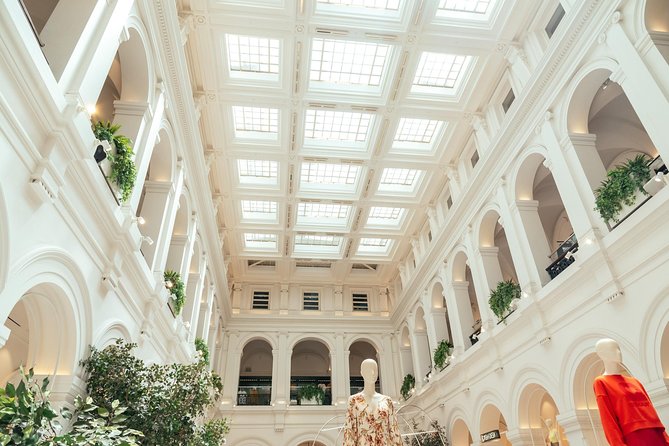
Next, you pass near the Melbourne Skydeck area and Eureka Tower. You do not need to pay for everything to appreciate the skyline scale here, and seeing the tallest building approach helps anchor the rest of the tour.
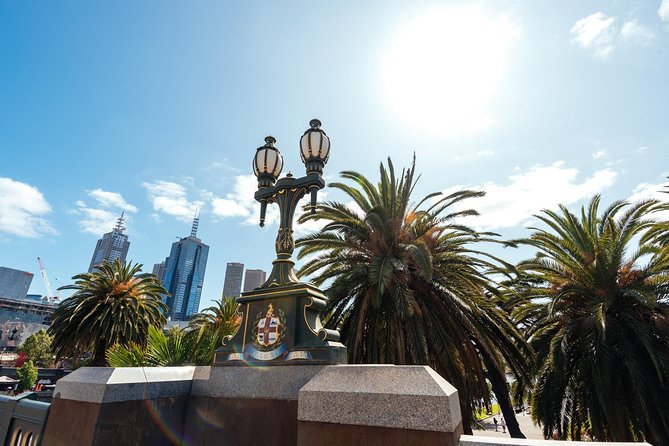
After that, you move to Princes Bridge, a landmark you can actually place on the city map. The bridge’s design is linked to Jenkins, D’Ebro and Grainger, and it was constructed in 1886 to 1888 by David Munro. I love when guides go beyond saying it is historic, and instead point out the named people tied to the structure.
Then you reach Arts Centre Melbourne. This stop is about the performing arts complex and the cluster of venues inside it, including Hamer Hall, Playhouse Theatre, State Theatre, Fairfax Studio, and the Australian Music Vault and galleries. Even if you are not catching a show, it is a great way to see how Melbourne centers culture in its urban core.
A practical tip: take a minute here to notice the scale and spacing. It makes the later stops feel less random, and more like a designed walk.
Australian Music Vault, NGV stained glass, and Fed Square
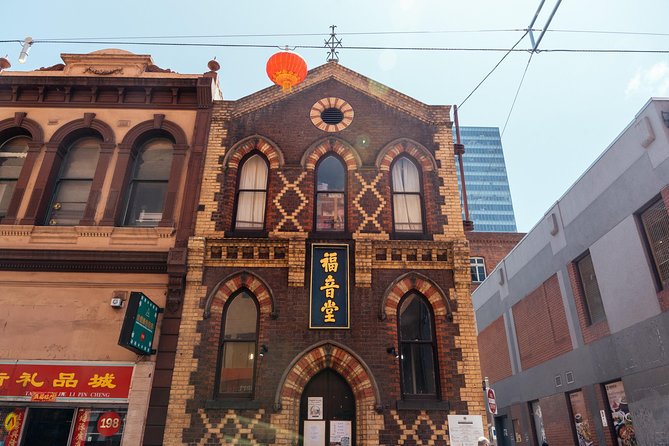
The Australian Music Vault is the tour’s culture reset. Instead of only pointing at buildings, you get the focus on Australian music memorabilia. If music is part of your travel brain, this stop gives you a quick, memorable context for why Melbourne takes arts so seriously.
Right next door is the National Gallery of Victoria. The highlight is the world’s largest stained glass ceiling by Simon Fieldhouse. That detail matters because stained glass is not something you casually stumble into during a walk. You are seeing a specific signature feature tied to the building, and you can often view it without needing to plan a separate museum day.
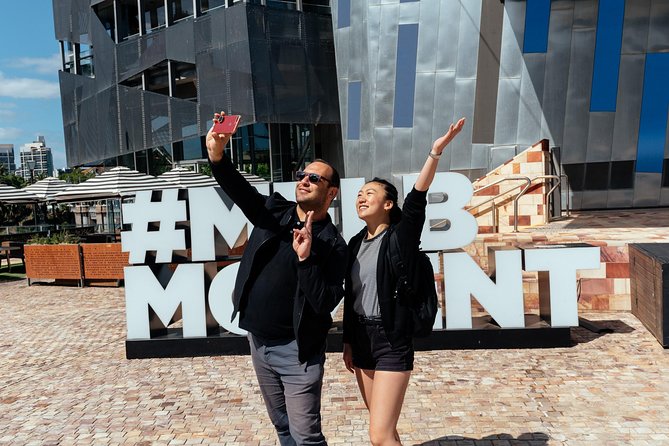
Then you cross over toward Fed Square, also known for how it sits relative to Kings Domain and the Sidney Myer Music Bowl. Even in a short stop, Fed Square helps you connect the CBD to the broader cultural zone beyond the immediate blocks.
This middle section works well if you like variety. You get music, visual art, and public-space architecture, all without committing to a long museum schedule.
Flinders Street Station, St Paul’s Cathedral, Hosier Lane, and AC/DC Lane
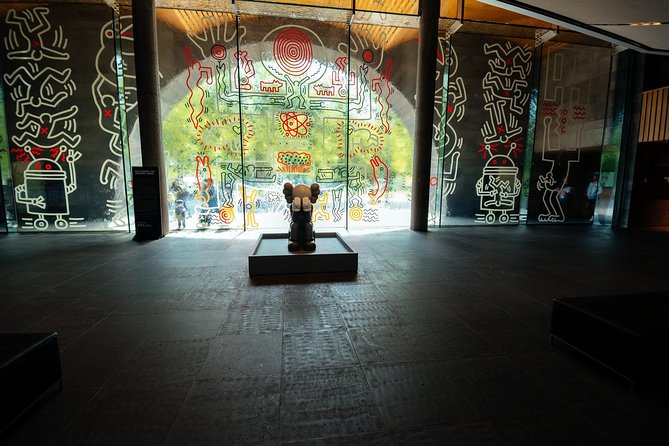
One of the tour’s most satisfying moments is Flinders Street Station. You’ll get French Renaissance architecture context, and you learn why it is more than a train building. It opened in 1910, covers two city blocks, and is described as the first railway station in an Australian city. The stop also references its role as the world’s busiest passenger station in the late 1920s.
That background changes how you look at it. Instead of seeing a landmark, you start seeing a piece of transport history that shaped city rhythms.
Next comes St Paul’s Cathedral, built from 1880 to 1891, with Gothic details and Anglican ties. The stop notes it as the seat of the Archbishop of Melbourne and it is the kind of building that makes you slow down, even on a time-boxed walk.
After the big architecture, you shift into Melbourne’s street-art personality with Hosier Lane. This bluestone laneway is known for quality urban street art that is often political and controversial. The art changes frequently, so the point is not to check one specific mural. The point is to notice how the city uses small streets as an open gallery and conversation space.
Then the route heads to ACDC Lane. The name is a tribute to the Australian rock band AC/DC, and the lane is known for story and art tied to the band. It is a fun pivot from formal landmarks to pop culture.
If your travel style includes looking past postcards, this set of stops is where the tour becomes memorable. You get big-day architectural icons, then you get the street-level, constantly changing side of the city.
More private days with a driver who knows the roads
Block Arcade, Bourke Street Mall, and Chinatown without the rush
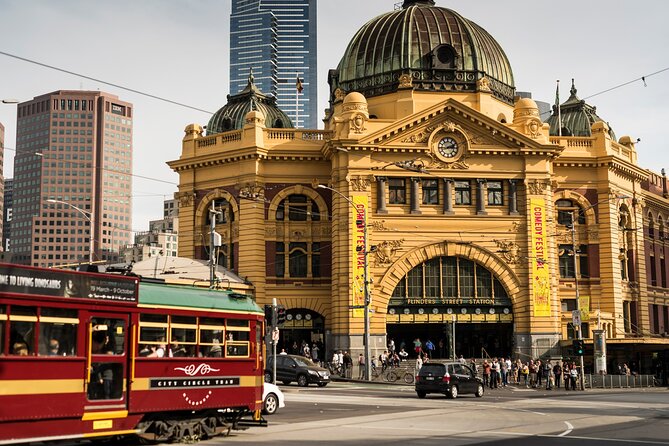
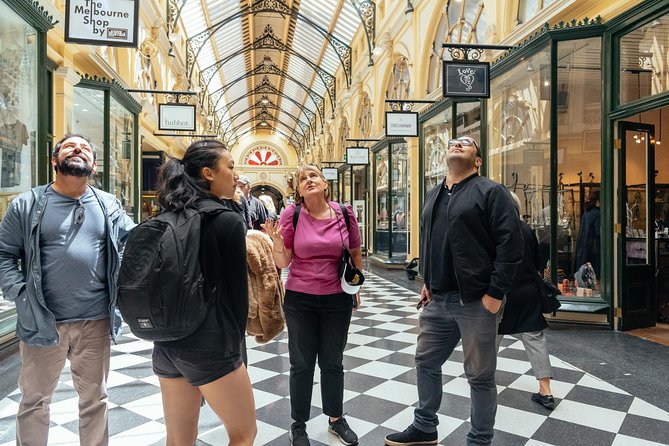
After the lanes, the tour moves into classic shopping and pedestrian street life. First up is the Block Arcade across Collins Street. It opened in 1892 and is considered one of the late Victorian era’s finest shopping arcades. I like this kind of stop because it gives you a sense of Melbourne’s style of mid-era city design, not just modern skyline shots.
Then you reach Bourke Street Mall, a pedestrian-only no-smoking mall described as the heart of Melbourne, anchored by two major department stores: David Jones and Myer. Even if you do not plan to shop, this is a useful “city center” reference point. It tells you where locals likely meet, walk, and browse.
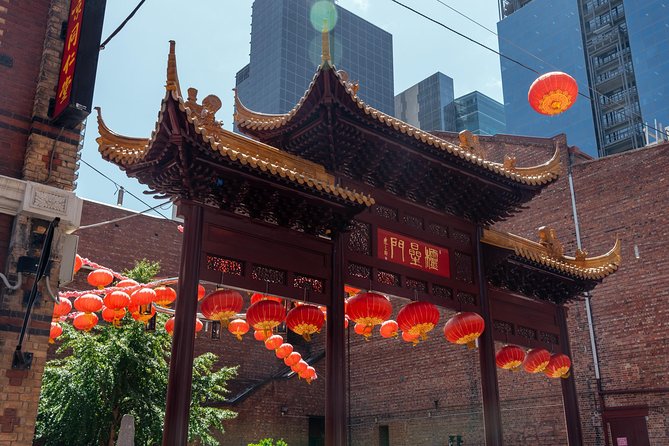
Chinatown follows, dating back to the gold rush days of the 1850s. The point here is not a checklist of restaurants. It’s about place. Chinatown in Melbourne is one of those areas where history is part of the streetscape.
This section is good for couples, solo travelers, and anyone who wants Melbourne culture with a practical shopping and walking frame. You come out knowing where to return later for a longer food walk or a relaxed browsing loop.
Meyers Place, Parliament House, and the Princess Theatre ghost story
The route continues with a walk over Russell and Exhibition Streets, then turning right at Crossley Lane and back toward Bourke Street to Pellegrini’s Bar in Meyers Place. Pellegrini’s is described as another Melbourne institution, co-owned and started by the late a… but the specific name is cut off in the details you have here. What I can say from the stop itself is that it is placed to connect you to local long-standing nightlife and bar culture in the CBD core.
From there, you reach Parliament House of Victoria at Spring Street, described as one of Melbourne’s best known landmarks and a meeting place for the Parliament of Victoria. This is a strong end stretch because it ties together city identity with governance and civic power.
The final stop is the Princess Theatre. The tour includes the well-known spooky lore that it is haunted by a friendly ghost named Federici. Even if you do not take ghost stories seriously, this stop is fun because it shows how theatre culture becomes part of the city’s shared myths.
You also get a sense of the kind of major productions staged there, with the tour specifically mentioning Phantom of the Opera.
By the time you finish, you are back at your starting area, so you avoid the stress of figuring out how to “get yourself home” after the sightseeing.
The included drink and tasting: how to use it well
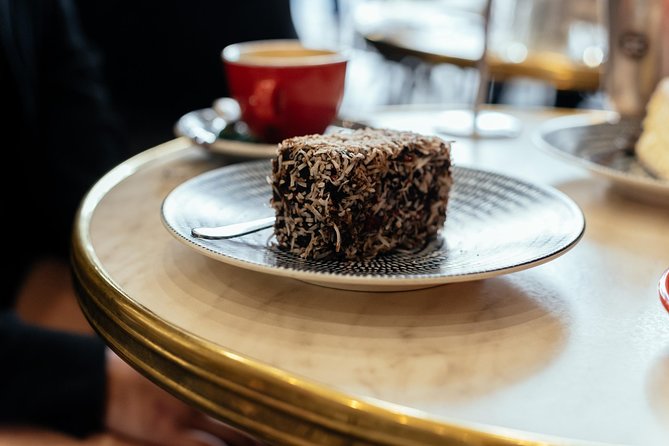
The tour includes one local drink plus a food tasting. The exact items are not spelled out in the details you have here, but the practical value is clear: you get a curated taste connected to the guide’s route, not a random stop picked by chance.
Use this in a smart way. If you know you want a specific type of meal after the tour, pay attention to flavors during the tasting and think about what you might want next. If you do not drink alcohol, check in advance about options related to the local drink portion, since the itinerary just says a local drink and tasting are included.
This inclusion also improves value compared with tours that only cover sights. It is one thing to see a city, it is another to carry home one small edible memory from it.
Price and value: is $148.99 per person fair for a private tour?
At $148.99 per person for a private three-hour walk, the value depends on how you travel.
If you are the kind of traveler who wants a dedicated guide, not a group schedule, this price starts to make sense. You are not just paying for entertainment, you are paying for a route built around landmarks, architectural context, laneway culture, and time-efficient stops across the CBD. The private format also means your guide can answer your questions without cutting into a larger group’s time.
It also helps that many of the stops are described as ticket-free for viewing during the tour. That does not mean Melbourne is free, but it does reduce the “surprise costs” that can add up when you start layering entry fees on a short visit.
If you are traveling with multiple people who can share the cost, it can feel even better. Just remember, it is still a walking tour. You are buying time and interpretation, not transport or long sittings.
Finally, the tour lists CO2 neutral operation with emissions offset. If that matters to your planning, it is a plus you can factor in.
Who should book this Melbourne private walk, and who might skip it
This tour fits you best if:
- You are in Melbourne for the first time and want a strong CBD orientation
- You like walking but do not want a self-guided maze
- You care about stories behind buildings, bridges, lanes, and cultural spaces
- You want a private format with your group and a guide to tailor your pace
You might skip it if:
- You hate walking or you need lots of breaks, since the stops are spread across the CBD and the tour runs about three hours
- You want hotel pickup, since this tour starts and ends at the Crown Melbourne meeting point
- You already know the CBD well and only want one or two specialized experiences, like a deep museum day or a food tour focused on one cuisine
Should you book? My practical call
Book this tour if you want a fast, friendly way to understand central Melbourne. The private format, the included local drink and food tasting, and the mix of major landmarks plus street-level culture make it a strong first stop after landing.
Skip it if you are trying to do Melbourne entirely by car, or if you expect the guide to handle your logistics end to end. You will be walking and you will meet at Crown Melbourne, so plan around that.
If you are organized about shoes and meeting point navigation, this is the kind of half-day tour that helps you enjoy the rest of your time in the city with less guesswork.
FAQ
How long is the private Melbourne tour?
The tour runs about 3 hours.
Is this tour private or shared with strangers?
It is private, meaning only your group will participate with your local guide.
What does the tour cost?
The price is $148.99 per person.
What is included in the price?
It includes a local guide and a complimentary local drink and food tasting. The tour also uses a mobile ticket.
Where do I meet, and where does it end?
You start at Crown Melbourne, 8 Whiteman St, Southbank VIC 3006, Australia, and the tour ends back at the same meeting point.
Do I get hotel pickup and drop-off?
No. Hotel pick up and drop off are not included.
Is the tour suitable for people with limited mobility?
The tour notes a moderate physical fitness level is recommended, and it is a walking route across multiple stops. If you need very limited walking, you might want to consider another option.
More Tours in Melbourne



More Tour Reviews in Melbourne
More Melbourne Tours in Melbourne
Recently added to the Melbourne list
- [PRIVATE TOUR] Mornington Peninsula Hot Springs | Winery & Sightseeing Tour★ 5.0 · 3 reviews
- Melbourne Tours Walk the Yarra & Historic Boathouse Lunch★ 5.0 · 3 reviews
- 3.5 Hours Group tour Melbourne trouble-makers tour★ 4.5 · 3 reviews
- Jewish Scene in multi cultural Melbourne★ 5.0 · 3 reviews
- Yarra Sunrise Running Tour★ 5.0 · 3 reviews
Private, side by side.
 ★ 5.0Private Great Ocean Road Tour (overnight option)From $1,219320 reviews
 ★ 5.0Boroughs of Melbourne – Signature Private City TourFrom $573114 reviews
 ★ 5.0Private Great Ocean Road – The Ultimate Aussie AdventureFrom $76778 reviews
 ★ 5.0Private and Customised Great Ocean Road and Luxury TourFrom $1,04076 reviews
 ★ 5.012 Apostles and Shipwreck Coast Express Private TourFrom $47172 reviews
 ★ 5.0Dandenong Ranges Private Day TourFrom $30562 reviews
 ★ 5.0Melbourne Sights & Sounds Private TourFrom $34051 reviews
 ★ 5.0Half-Day or Full-Day Tour with Private Guide from MelbourneFrom $68149 reviews